 I’ve guest-edited an issue of the electrifying electronic crime magazine The Big Click. The exact circumstances surrounding the genesis of my guest editorial gig are lost in a distant cocktail-tinted haze, but I recall Nick Mamatas in the bar at World Horror Con in Portland last year saying something along the lines of, “You wanna guest-edit an issue? Sure! How ’bout January? And do a theme. Themes are good.”
This led to that, and that led to me acquiring stories from two of the most incredible short fiction writers currently slinging stories in the field: Silvia Moreno-Garcia and Ray Vukcevich.
I had recently finished heading up the Sunburst Award Jury, which had selected BC author Moreno-Garcia’s short fiction collection This Strange Way of Dying as one of the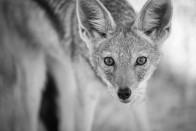 five most outstanding speculative fiction books in all of Canada, or written by any Canadian anywhere in the world, for the entire year prior. This debut collection kept company on our considerations list with Booker Prize winners and recipients of numerous other literary awards. It’s a huge honor to make a shortlist like that, and it was an honor and a joy to have read such a book. Her story “Jackals” lovingly treads that seductively weird, frightening line between what is and what shouldn’t be.
And anyone who pays attention to fiction emerging from this other coast (I’m squinting at you, New York, so far away) recognizes Vukcevich as another regional literary treasure. Also from the Pacific Northwest (though from the other side of the Peace Arch from Moreno-Garcia), Vukcevich’s short fiction collections are award-worthy themselves. His Big Click piece “All About the Ball” is an exercise in surreality, an offkilter crime story set in a swiftly tilting universe, centered on what is most definitely not your typical police interrogation.
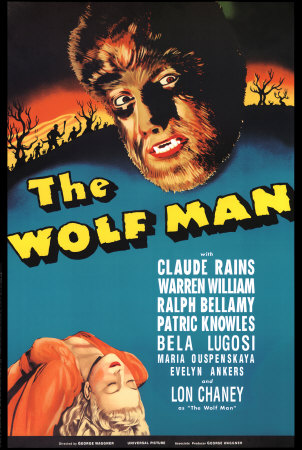 Add to these two fabulous stories an interview with David Liss by Claude Lalumière, a peek review of Robert Crais’s Suspect, a deeply thoughtful examination of Patricia Highsmith’s The Animal-Lover’s Book of Beastly Murder, and an essay by noirist Barry Graham titled “Meeting the Werewolf.” This last opens with a quote from the 1941 film The Wolf Man: “Even a man who is pure in heart and says his prayers by night may become a wolf when the wolfbane blooms and the autumn moon is bright…”
Here’s my full editorial for the Bête NOIR issue of THE BIG CLICK.
 About A Tale for the Time Being, the Sunburst jury said: Cast ashore on Vancouver Island by the Pacific Gyre, a Hello Kitty lunchbox opens upon an ocean of story, connecting Ruth and Nao across space and time. Some books flirt with the fantastic, Ozeki’s dances with it, such that it weaves through the narrative with sinuous grace, embracing evanescence. As Nao declares to the reader at the outset, “You’re my kind of time being, and together we’ll make magic.” All matters therein are given equal weight, yet the novel has a deft touch, often humorous. It is a seriously playful work. A Tale for the Time Being is sui generis, free ranging over fact and fancy, physics and metaphysics, the intimate and the universal; in a true sense it is a Zen koan extended to 422 pages, which is yet another paradox. Like the bumblebee, it shouldn’t fly but it does. Beautifully.
 About The Cats of Tanglewood Forest, the Sunburst Jury said: A deceptively simple wish-fulfillment fantasy, The Cats of Tanglewood Forest draws upon the deep tradition of animal fables and fairy tales, upon the folklore of New World and Old, and upon the classic children’s literature of the past two centuries, but distilled into pure de Lint, faithful to its sources yet shaped by his own sensibilities. An enhancement rather than expansion of A Circle of Cats, the collaboration of writer and artist produces a fusion of word and image into a seamless whole, delighting the eye anew with the turning of each page. There are darker tones, to be sure, as snake-bite carries young Lillian past the jaws of death to the tribe of cat, and the magic of the deep wood that restores her humanity will come at a cost, and a debt owed. But that’s what a good fable is, timeless yet always cognisant of time’s passage.
 Zandra Renwick